When an Australian honey producer came to us, they had a clear problem: manual bottling couldn't keep up with growing demand. Sticky honey, inconsistent fill levels, loose caps, crooked labels — every batch was a headache.
The solution? A four-machine production line: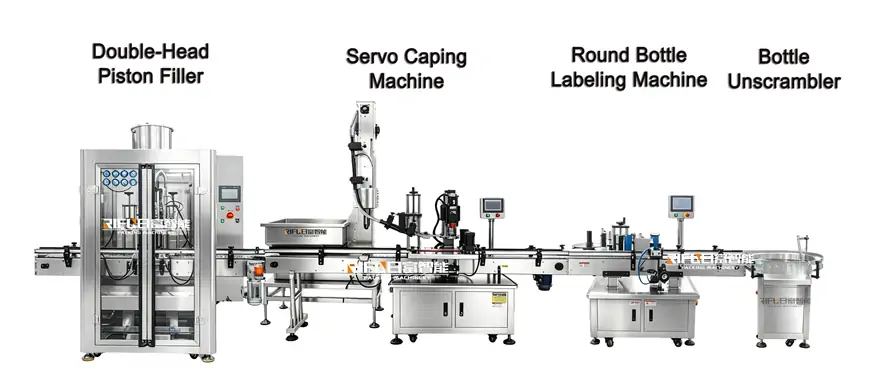
Watch the Line in Action
Our Australian client recently shared footage of their line running on the production floor.The video captures the back half of the line in motion (the piston filler sits just upstream). Here's what's happening:
Three Stations, One Flow
Servo Capping: Torque That Doesn't Drift
Honey is unforgiving — a loose cap leaks in transit, a crooked cap ruins the shelf appeal. The servo capper grabs each filled bottle and spins the cap on with repeatable, controlled torque. No cross-threading, no guesswork. Unlike pneumatic cappers that drift with air pressure, servo motors hold consistency within ±2% — critical when your honey ships across Australia's vast supply chain.
Wrap-Around Labeling: ±1mm, Every Bottle
After capping, bottles hit the labeling station. The machine applies each label with ±1mm placement accuracy, smoothing it flat without wrinkles. On a retail shelf, a crooked label doesn't whisper "artisanal" — it shouts "quality control failure." This machine ensures every bottle looks identical.
Collecting Table: Orderly Handoff, No Bottleneck
At the line's exit, finished bottles feed onto the unscrambler's rotary collecting table. Instead of jamming at the conveyor end — bottles tipping, operator scrambling — the table rotates them into neat rows. One person calmly picks and packs without breaking rhythm. For a continuous honey run, this is the difference between controlled output and end-of-line chaos.
Why This Combo Works for Honey
Honey isn't water. It's thick, temperature-sensitive, and unforgiving on the wrong equipment.
Standard filling and capping machines struggle with viscosity drift — fill levels wander, caps tighten inconsistently. The piston filler solves the fill side: positive-displacement dosing that stays steady regardless of how thick the honey runs. On the capping end, servo drive replaces pneumatic guesswork with torque you can trust, bottle after bottle.
The result? One operator can oversee the entire line — capping, labeling, and collecting — without chasing loose caps or realigning crooked labels. For a growing brand, that's the difference between taking the next purchase order and turning it down.
The Review That Said it All
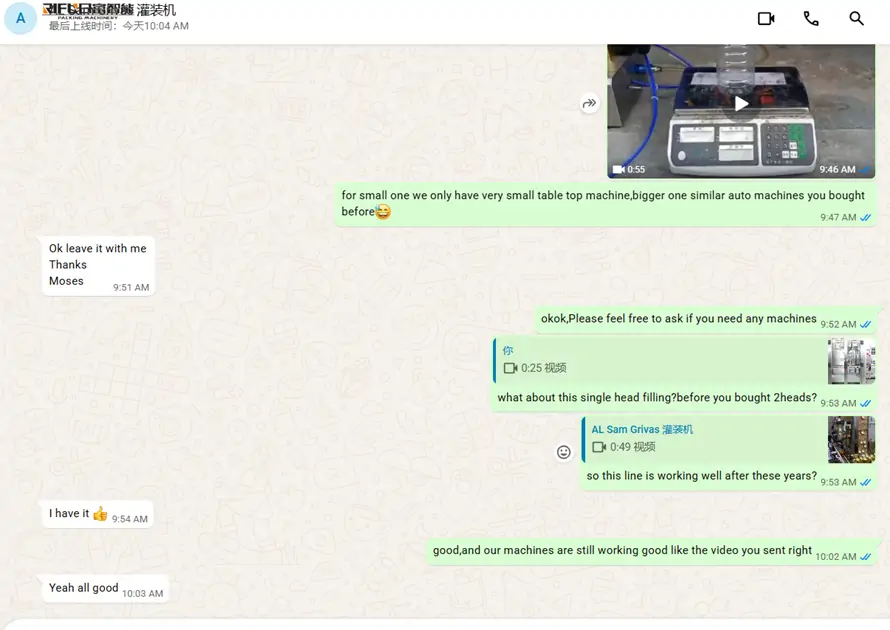
Months after installation, we checked in. The reply came back in three words:Yeah all good.
Planning a honey packaging line?
Contact us with your bottle specs, cap type, and target output. We'll configure a line that fits — no overselling, no guesswork.
Full line: double-head piston filler + servo capper + labeling machine + bottle collecting table. The video shows the capping-to-collection segment. Contact us for a complete walkthrough.
